Building a Reliable Fire Equipment Testing Plan for Departments of Any Size
Planning a sustainable fire protection program starts with a clear inventory of what you own and how it’s used. Begin by cataloging hoses, ladders, nozzles, and appliances by length, age, manufacturer, and assignment. Then map their service environment—urban high-rises, industrial hazards, or wildland edges—to anticipate stressors. This baseline lets you align testing cycles with operational risk, avoiding rushed decisions and throttling downtime during peak incident periods.
Assess the standards that shape your test cadence and pass/fail criteria. Fire hose testing (NFPA 1962) and ground ladder testing (NFPA 1932) define minimum expectations, but your risk profile may warrant shorter intervals. In practice, high-call districts, corrosive atmospheres, and heavy apparatus loads justify tighter inspections. Document how your local conditions influence frequency so budget approvals and shift coverage are defensible and repeatable year after year.
Next, scope the workflow that moves gear from frontline status to testing and back to service without creating coverage gaps. Stage backfill equipment in advance, and verify transport, staging areas, and drying space. Sequence companies through testing windows to buffer response capacity. Meanwhile, mark critical mutual aid days to avoid conflicts. A well-sequenced plan prevents cascades of unavailable apparatus, which can otherwise strain dispatch and longer-distance coverage.
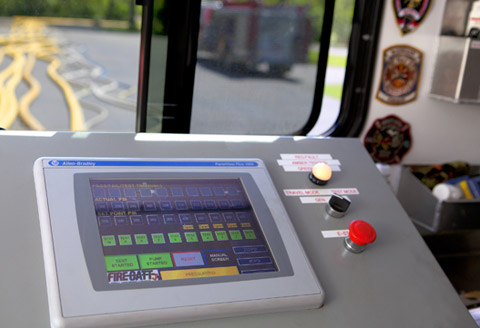
Quality hinges on objective measurements and repeatable processes. Computerized Mobile Test Lab testing offers consistent pressure control and digital capture of results, reducing operator subjectivity. Beyond that, calibrate gauges and meters on a published schedule, and validate that environmental conditions—temperature, space, and water supply—meet test specifications. These guardrails help isolate equipment defects from test-site variables, sharpening decisions to repair, retire, or reassign components.
Budgeting improves when results are granular. Barcoded performance documentation links each asset’s history to trends you can act on. Often, slow drift in pressure loss or recurring coupling issues signals a maintenance task before failure. Tie those patterns to lifecycle forecasts by manufacturer and use case. Then spread replacement over quarters to flatten spikes, and reserve contingency funds for unplanned retirements after peak-season surges.
Maintenance planning should distinguish quick-turn fixes from deeper refurbishment. Inspect couplings, gaskets, and ladder feet immediately after testing, when defects are visible and tagged. Then assign work orders with parts availability checked in advance. For nozzles and appliance testing, verify flow rates, smooth valve operation, and pattern integrity. Finally, log remedial actions against each asset so subsequent failures can be traced back to parts batches or harsh deployment conditions.
Logistics can quietly make or break the program. Secure a weather-safe, well-lit staging area with drainage to manage drying, and position racks to avoid mildew and unnecessary handling. Align traffic flow so tested gear never mixes with untested items. Then buffer the schedule for decon time when returning from hazmat or wildfire events, since residue can skew readings and prematurely age hose jackets or ladder components.
Compliance is not the finish line; resilience is. Validate that your documentation supports internal audits, accreditation reviews, and insurer questions. In the same stroke, update standard operating guidelines to reflect test findings—adjust pump charts, ladder load limits, or deployment pairings. This feedback loop refines tactics and protects crews by ensuring the field playbook matches the demonstrated capabilities of your equipment under load.
Vendor fit deserves deliberate attention. Evaluate responsiveness, the clarity of result reporting, and the ease of integrating data with your asset system. Verify chain-of-custody practices for removed-from-service items and the turnaround for retests after repairs. Then phase pilot engagements before multi-year commitments, using defined success metrics: throughput per day, first-pass yield, and the percentage of assets receiving actionable recommendations.
Seasonal timing can reduce friction. Aim to test before heat waves or freeze cycles that complicate drying and transport. Schedule high-wear lines and primary ladders earlier, leaving reserves for late windows. Finally, rehearse post-test reintegration: check hose loads, nozzle settings, appliance couplings, and ladder mounts on apparatus before the next shift. A measured, data-driven approach keeps readiness high while steadily elevating safety and reliability.